
Do the Beautiful Thing With What You Have
Do the Beautiful Thing: What's in Your Hand?

This Sunday, while Mat was away, Dara brought the teaching from Mark 14:1–9. And honestly, she left us with a question we’re still carrying:
What’s in your hand?
Not what do you wish you had. Not what could you do with more money, more time, more influence, or more experience.
What has already been placed in your hands?
And what beautiful thing might God be inviting you to do with it?
A woman, a jar, and a room full of opinions
The scene in Mark 14 is intense.
It’s two days before Passover. Religious leaders are plotting to capture and kill Jesus. Meanwhile, Jesus is eating at the home of Simon in Bethany.
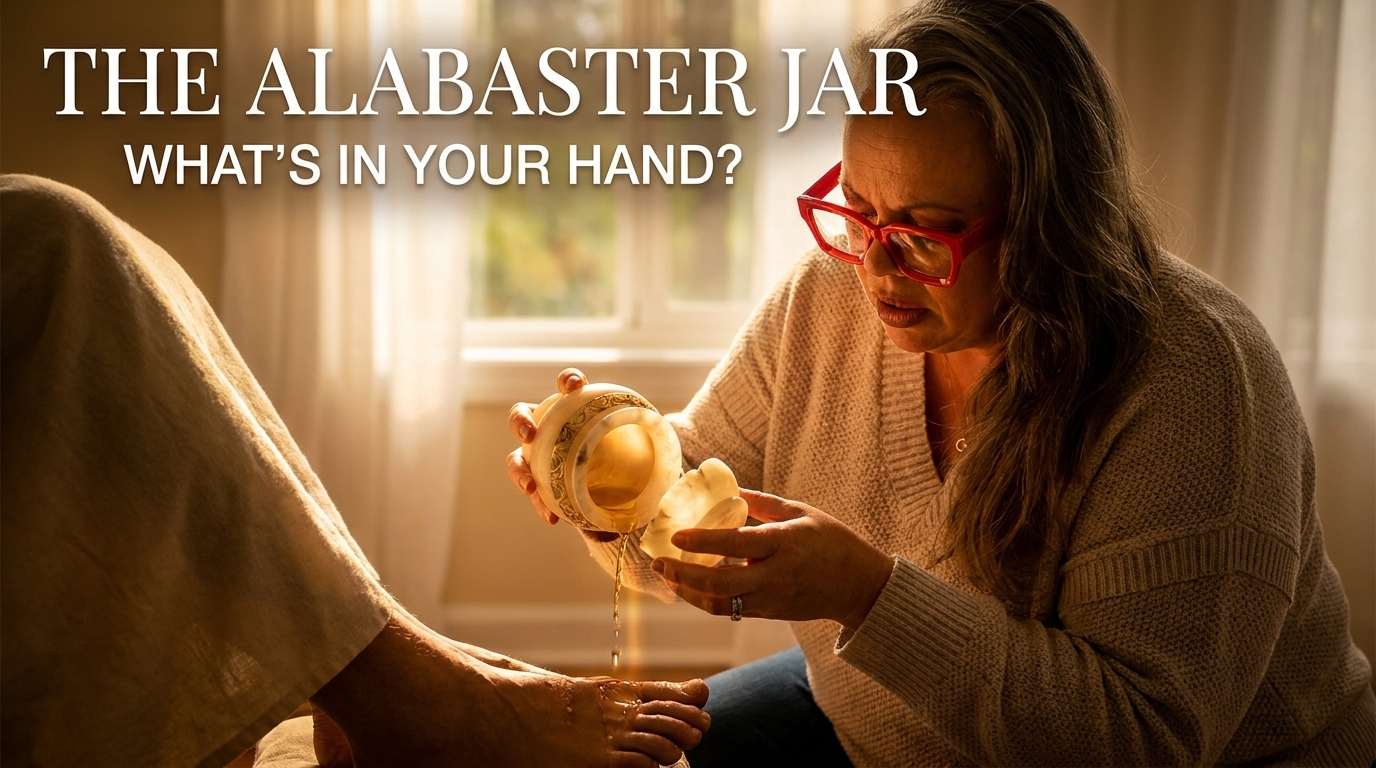
Then a woman walks in carrying an alabaster jar filled with expensive perfume made from pure nard.
This wasn’t a small bottle she picked up on the way to dinner. The perfume was worth more than 300 denarii, roughly a laborer’s yearly wage.
A year’s wages.
And she broke the jar and poured the perfume over Jesus’ head.
No speech. No announcement. No explanation.
She saw an opportunity to honor Jesus with something valuable she had, and she did it.

When love looks like waste
The people around the table immediately objected.
“Why waste such expensive perfume?” they asked. “It could have been sold for a year’s wages and the money given to the poor.”
And here’s what makes their criticism interesting: helping the poor is good.
Generosity is good. Caring for people in need is good. Their alternative wasn’t selfish. It sounded practical. It even sounded wise.
But the existence of another good thing didn’t make this woman’s act wasteful.
Sometimes we do the same thing.
We look at someone else’s gift, generosity, service, or sacrifice, and we start doing the math.
Was that necessary?
Couldn’t they have used the money somewhere else?
Couldn’t they have spent that time doing something more productive?
Why would they go that far?
There’s always another good thing that could be done. But practical isn’t the only kind of valuable.
Jesus called it beautiful
The people in that room saw the same woman, the same jar, and the same perfume.
But they came to completely different conclusions.
They called it waste.
Jesus called it beautiful.
“Leave her alone,” Jesus said. “Why criticize her for doing such a good thing to me?”
The NIV records it this way:
> “She has done a beautiful thing to me.”
The people watching were evaluating what else could have been done with the perfume.
Jesus was receiving the love with which it had been given.
That matters.
Sometimes the person watching won’t understand the value of what you’re doing because they aren’t the one you’re doing it for. The woman knew who was in front of her. She knew what she had. And she chose who to honor with it.
Love isn’t always efficient.
Honor isn’t always practical.
Generosity doesn’t always make sense to the person doing the math.
Sometimes something has value simply because of what it means to the person receiving it.
“She has done what she could”
Jesus continued:
> “She has done what she could.”
We often make that sound small.
“I only had a little.”
“I just helped where I could.”
“I did what I could.”
We put words like only, just, and could in front of what we have and what we’ve done, almost like we’re apologizing because it wasn’t more.
But nobody in that room thought this woman’s offering was small.
They thought it was extravagant.
They thought it was too much.
They thought it was wasteful.
Jesus saw something different. He saw a woman who recognized the opportunity in front of her and responded with what she had.
What if what you can do isn’t small at all?
What if it’s simply what faithfulness looks like in your hands today?
What’s in your hand?
Years ago, early in her faith, Dara heard a guest pastor teach from this passage. He asked a simple question:
What’s in your hand?
At the time, her answer was her Bible.
She didn’t feel like she had very much. But she had her Bible, and it was her lifesaver. It gave her something to cling to as her faith began to grow.
Today, that Bible is worn, tattered, and covered in notes. It still sits in her hands. And one of the most beautiful things she can do with it is share what she has found there with someone else.
The truth that once helped her hold on is now something she can use to encourage another person.
So what’s in your hand?
Maybe it’s a Bible.
Maybe it’s a listening ear.
Maybe it’s a meal you can prepare.
Maybe it’s a gift, a skill, a home, a little extra money, or an hour of your time.
Maybe it’s the ability to encourage someone who feels forgotten.
Maybe it’s the courage to forgive.
Maybe it’s simply your willingness to show up.
Don’t start with what you lack. Start with what you have.
We don’t know when the woman received the alabaster jar. We don’t know why she had it or how long she had kept it.
We only know that when the opportunity came to honor Jesus, she had something in her hand, and she used it.

Look at who’s in front of you
Dara encouraged us to look for the beautiful thing we can do.
Maybe it’s extravagant. Maybe it’s incredibly simple.
Maybe it costs money. Maybe it doesn’t cost a dime.
It could be:
Making a meal for someone who needs care.
Sitting with someone who shouldn’t have to sit alone.
Encouraging a person who is ready to give up.
Using your talent to bless someone else.
Giving flowers to someone who doesn’t need flowers.
Celebrating something other people wouldn’t consider a big deal.
Serving when no one is watching.
Giving someone something valuable simply to say, “I see you. You matter to me. I love you.”
Someone nearby may not understand.
They may have another idea about what you could have done. They may even have a good idea.
That doesn’t automatically mean the beautiful thing in front of you isn’t worth doing.
This passage isn’t permission to ignore wisdom or correction. It is an invitation to stop believing that practical is the only kind of valuable.
As followers of Jesus, the beautiful things we do for one another become ways we honor Him.
The applause isn’t the point
Jesus said that wherever the good news was preached, this woman’s act would be remembered.
More than 2,000 years later, we’re still talking about her.
The people in the room were concerned that something valuable had been wasted.
Jesus knew something valuable had happened.
They remembered the price of the perfume.
Jesus remembered the woman who poured it out.
That doesn’t mean every beautiful thing we do will be remembered by generations. Most won’t.
Some of the most beautiful things you ever do may only be known by you, the person who received them, and God.
And that’s enough.
The value of what you do isn’t determined by applause. It isn’t determined by whether everyone understands it. It isn’t determined by whether someone nearby can think of a more practical use for what you’ve given.
Sometimes the person receiving your love may be the only one who understands what it meant.
That’s still enough.
Do the beautiful thing
So we’re leaving this message with the same question Dara received all those years ago:
What’s in your hand?
What has God already given you that you can use to love someone?
And who has He put in front of you?
You may not have what someone else has. You may not be able to do what someone else can do. You may not have enough to meet every need.
But Jesus didn’t say this woman did everything.
He said she did what she could.

The people around her called it wasteful.
Jesus called it beautiful.
So don’t let someone else’s opinion of what you could have done keep you from doing what God has put in front of you.
Look at what’s in your hand.
Look at who’s in front of you.
And when the opportunity comes, do the beautiful thing.
You can watch Dara’s full message on YouTube, or explore more messages through our sermon library.
We’d love to worship with you and your family:
Sundays at 10 AM
Greenbrook Park
812 Fisher Ave, Smithville, TN 37166
Learn more at localchurchgathering.com.